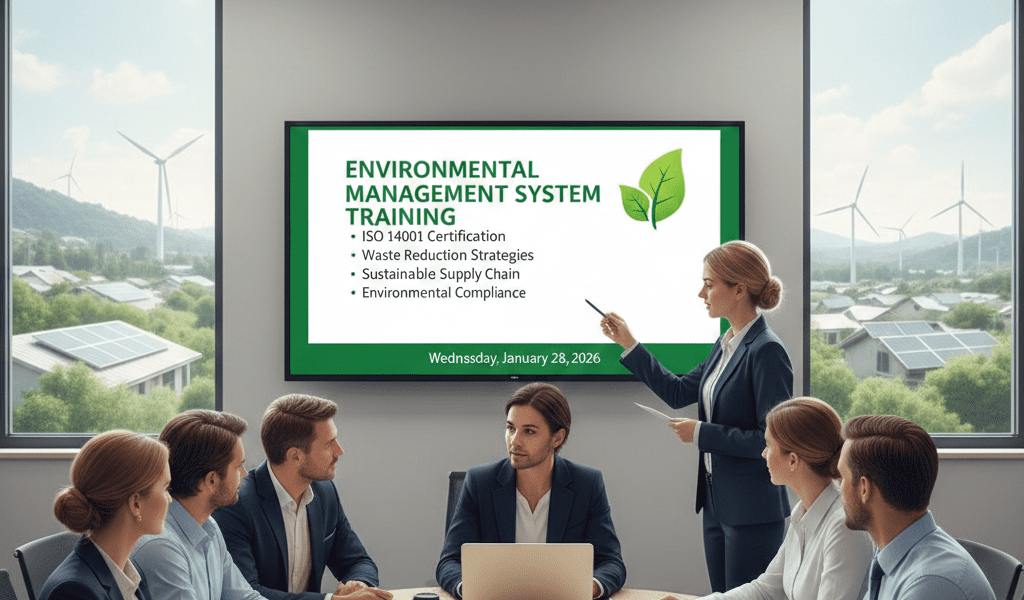
An Environmental Management System (EMS) is a structured framework that helps organizations identify, manage, monitor, and control their environmental impacts in a systematic way. It provides a practical approach for integrating environmental considerations into daily operations, decision-making, and long-term planning. EMS is not just about compliance with environmental laws; it is about continuous improvement, responsible resource use, and sustainable development. In today’s world, where environmental challenges such as climate change, pollution, and resource depletion are growing rapidly, EMS has become an essential tool for organizations across all sectors. However, the successful implementation of an EMS largely depends on the knowledge, skills, and commitment of people within the organization, which makes EMS training courses critically important.
Sustainable development aims to meet present needs without compromising the ability of future generations to meet their own needs. EMS supports this goal by encouraging organizations to reduce waste, lower emissions, conserve resources, and minimize environmental risks. Through structured planning and continuous improvement, EMS helps organizations balance economic growth with environmental responsibility. Training plays a central role in this process by building awareness and capacity at all levels of an organization. Without proper training, EMS often remains a paper-based system with limited real-world impact. EMS training courses ensure that employees understand environmental responsibilities, legal obligations, and practical methods for improving environmental performance.
The primary objective of Environmental Management System training is to enhance awareness of environmental issues and their connection to organizational activities. Many environmental impacts occur not due to intentional harm but because employees lack understanding of how their actions affect the environment. Training helps individuals recognize issues such as excessive energy use, improper waste disposal, water pollution, and unsafe handling of hazardous materials. When employees understand these issues, they are more likely to adopt environmentally responsible behavior and support organizational sustainability goals.
Another key objective of Environmental Management System training is to build skills for compliance with environmental laws, regulations, and standards. Environmental legislation is becoming more complex and stricter in many countries. Organizations are required to comply with local, national, and international environmental requirements, and failure to do so can result in fines, legal action, and reputational damage. EMS training equips staff with the knowledge needed to understand regulatory requirements, identify compliance gaps, and implement corrective actions. This reduces legal risks and ensures smoother interactions with regulatory authorities.
Promoting sustainable practices within organizations is also a major objective of EMS training. Sustainability goes beyond compliance and focuses on long-term environmental stewardship. EMS training encourages practices such as efficient energy use, water conservation, waste reduction, recycling, and responsible procurement. These practices not only protect the environment but also lead to cost savings and improved operational efficiency. Training helps embed sustainability into daily operations rather than treating it as a separate or optional activity.
Strengthening monitoring, reporting, and auditing capabilities is another important objective of EMS training. An effective EMS relies on accurate data collection, performance measurement, and regular evaluation. Training enables employees to monitor environmental performance, use key performance indicators, conduct internal audits, and prepare environmental reports. These activities help organizations track progress, identify weaknesses, and demonstrate transparency to stakeholders such as regulators, customers, and investors.
EMS training courses typically cover several key components that together form the foundation of an effective environmental management system. One of the most important components is environmental policy and framework. Training introduces participants to the concept of environmental policy, which reflects an organization’s commitment to environmental protection and compliance. It also covers internationally recognized standards such as ISO 14001, which provides a systematic framework for developing, implementing, maintaining, and improving an EMS. Understanding ISO 14001 is essential for organizations seeking certification or alignment with global best practices. Training also addresses national and local environmental regulations to ensure compliance at all operational levels.
Planning and implementation is another core component of EMS training. This stage focuses on identifying environmental aspects and impacts associated with organizational activities, products, and services. Training teaches participants how to assess which activities have significant environmental impacts and prioritize them for action. It also covers setting realistic environmental objectives and targets aligned with organizational goals and legal requirements. Effective planning ensures that environmental efforts are focused, measurable, and achievable.
Operational control is a practical component of Environmental Management System training that focuses on day-to-day environmental management. This includes waste management, pollution prevention, energy efficiency, water conservation, and safe handling of chemicals and hazardous materials. Training provides practical guidance on implementing procedures and controls that minimize environmental risks. Employees learn how to follow standard operating procedures, respond to environmental incidents, and maintain environmentally sound practices during routine and non-routine operations.
Monitoring and evaluation are essential for measuring the effectiveness of an EMS, and they are a major focus of EMS training courses. Participants learn how to conduct environmental monitoring, measure emissions and resource consumption, and track performance against objectives and targets. Training also covers environmental audits, which are systematic evaluations of Environmental Management System performance. Audits help identify non-conformities, assess compliance, and recommend improvements. Understanding performance indicators and data analysis enables organizations to make informed decisions and demonstrate continuous improvement.
Continuous improvement is a fundamental principle of EMS and is strongly emphasized in training courses. Environmental management is not a one-time activity but an ongoing process. Training teaches how to identify root causes of environmental problems, implement corrective and preventive actions, and update policies and procedures as needed. This approach ensures that the EMS evolves in response to changing environmental conditions, regulatory requirements, and organizational priorities.
EMS training courses are available in different types to meet the needs of various roles and levels within an organization. Basic awareness training is designed for general staff and focuses on introducing environmental concepts, organizational environmental policy, and individual responsibilities. This type of training helps create a culture of environmental awareness and ensures that all employees understand their role in supporting the EMS.
Specialized EMS training is targeted at managers, engineers, supervisors, and environmental professionals. It provides deeper knowledge of EMS planning, implementation, monitoring, and improvement. This training equips leaders and technical staff with the skills needed to manage environmental risks, allocate resources, and drive continuous improvement initiatives.
Certification courses are another important category of EMS training. These include programs such as ISO 14001 Lead Auditor, Internal Auditor, and EMS Manager courses. Certification training prepares participants to conduct audits, manage EMS implementation, and lead certification processes. Certified professionals play a critical role in ensuring the effectiveness and credibility of an organization’s EMS.
Sector-specific EMS training is designed to address the unique environmental challenges faced by different industries such as construction, manufacturing, healthcare, oil and gas, and agriculture. Each sector has specific environmental risks, regulatory requirements, and best practices. Tailored training ensures that participants gain relevant knowledge and practical solutions applicable to their industry.
EMS training offers numerous benefits to organizations and society as a whole. One of the most significant benefits is improved compliance with environmental laws and regulations. Trained employees are better equipped to identify compliance requirements, follow procedures, and respond effectively to inspections and audits. This reduces the risk of violations, penalties, and legal disputes.
Another major benefit of EMS training is the reduction of environmental risks and liabilities. By identifying potential environmental hazards and implementing control measures, organizations can prevent accidents, spills, and pollution incidents. This not only protects the environment but also reduces cleanup costs, insurance claims, and reputational damage.
EMS training also enhances corporate image and stakeholder trust. Customers, investors, regulators, and the public increasingly expect organizations to operate responsibly and sustainably. A well-trained workforce and a strong Environmental Management System demonstrate commitment to environmental protection and transparency. This can improve brand reputation, attract environmentally conscious customers, and strengthen relationships with stakeholders.
Cost savings through resource efficiency are another important benefit of EMS training. Training encourages efficient use of energy, water, and raw materials, as well as waste reduction and recycling. These practices often lead to significant cost savings over time. By reducing waste and improving efficiency, organizations can achieve both environmental and financial benefits.
On a broader level, EMS training contributes to global sustainability goals such as climate action, responsible consumption, and environmental protection. Trained organizations play a key role in reducing environmental impacts and supporting national and international sustainability initiatives. EMS training helps translate global goals into practical actions at the organizational level.
Despite its many benefits, EMS training faces several challenges. One common challenge is the lack of awareness and motivation among employees and management. Some organizations view environmental management as a regulatory burden rather than a strategic opportunity. Overcoming this mindset requires strong leadership commitment and effective communication about the benefits of EMS training.
Limited resources and funding can also be a challenge, particularly for small and medium-sized enterprises. Training programs require time, financial investment, and skilled trainers. Organizations with limited resources may struggle to prioritize EMS training. However, the long-term benefits of reduced risks and cost savings often outweigh the initial investment.
Resistance to change is another significant challenge in EMS training. Implementing an EMS may require changes in procedures, responsibilities, and organizational culture. Employees may resist these changes due to lack of understanding or fear of increased workload. Effective training, engagement, and leadership support are essential to address resistance and build acceptance.
The need for continuous updates is also a challenge, as environmental standards and regulations evolve over time. EMS training programs must be regularly updated to reflect new legal requirements, technological advancements, and best practices. Organizations must commit to ongoing learning rather than one-time training.
Case studies from various industries demonstrate the value of EMS training in successful environmental management. Many organizations have achieved significant improvements in environmental performance after investing in comprehensive EMS training programs. For example, manufacturing companies have reduced waste and energy consumption, while construction firms have improved compliance and reduced environmental incidents. In many cases, training has played a crucial role in achieving and maintaining ISO 14001 certification by ensuring that employees understand and apply EMS requirements effectively.
In conclusion, Environmental Management System training courses are a powerful tool for supporting sustainable development and improving organizational environmental performance. EMS training builds awareness, develops skills, and promotes a culture of environmental responsibility. By covering key components such as policy, planning, operational control, monitoring, and continuous improvement, training ensures effective EMS implementation. Integrating EMS training into organizational culture is essential for long-term success. Looking ahead, the future of EMS training includes digital learning platforms, e-learning modules, and global collaboration, which will make training more accessible, flexible, and impactful. Organizations that invest in EMS training are better prepared to meet environmental challenges and contribute to a more sustainable future.
Frequently Asked Questions (FAQs)
1. What is the main purpose of EMS training?
The main purpose of EMS training is to help individuals and organizations understand environmental responsibilities, comply with regulations, and improve environmental performance through structured management practices.
2. Who should attend EMS training courses?
EMS training is suitable for all employees, including general staff, managers, engineers, environmental officers, and auditors, depending on the level and type of training.
3. Is ISO 14001 training mandatory for organizations?
ISO 14001 training is not legally mandatory, but it is highly recommended for organizations seeking certification or aiming to improve environmental management practices.
4. How does EMS training benefit organizations financially?
EMS training helps reduce waste, improve resource efficiency, prevent environmental incidents, and avoid fines, leading to long-term cost savings.
5. How often should EMS training be updated?
EMS training should be updated regularly to reflect changes in environmental laws, standards, and organizational processes, ensuring continuous improvement and compliance.