
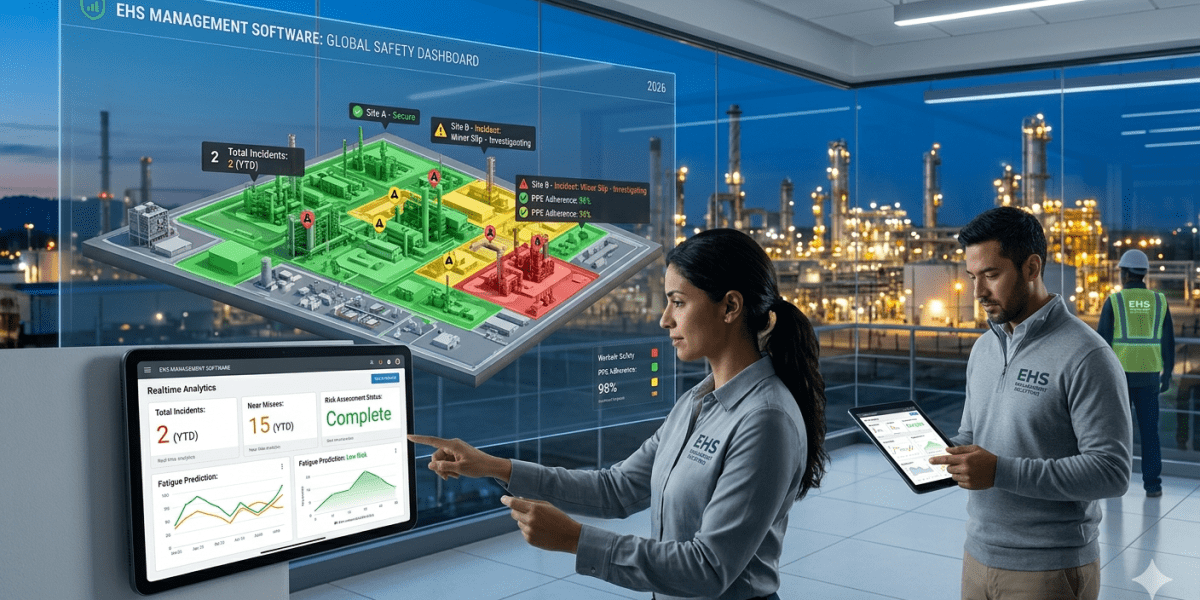
EHS Management Software (Environment, Health, and Safety) has transitioned from a “nice-to-have” tool to an essential requirement for modern enterprises. As industries become more complex, the ability to manage safety data through manual spreadsheets is no longer sustainable. In 2026, a high-quality digital solution allows organizations to track incidents, manage audits, and ensure regulatory compliance in real-time.
The Evolution of Safety Management
Historically, safety management was a paper-heavy process. Safety officers would walk the floor with clipboards, and data would be filed away in cabinets, often never to be analyzed. Today, EHS Management Software centralizes this data into a single “source of truth.” This shift enables proactive rather than reactive safety measures. Instead of asking “What happened?”, companies are now asking “What is likely to happen next?”
Core Modules of EHS Platforms
A comprehensive EHS Management Software suite typically includes several specialized modules:
- Incident Management: Reporting accidents or “near-misses” instantly via mobile apps.
- Audit and Inspection: Creating digital checklists for ISO compliance (like ISO 45001 or ISO 14001).
- Risk Assessment: Digitizing the Hazard Identification process to ensure nothing is overlooked.
- Training Tracking: Managing employee certifications for specialized roles, such as those in the oil and gas sector.
Benefits of Implementing EHS Management Software
The primary advantage of EHS Management Software is visibility. When every safety observation is logged digitally, patterns emerge. For example, if a specific department shows a spike in minor slips, management can intervene before a major injury occurs.
1. Real-Time Data and Analytics
With digital tools, dashboards provide immediate insights. Executives can see safety performance across multiple global locations at a glance. This is particularly useful for organizations maintaining ISO 9001 Quality Management Systems, as data integrity is a core requirement of the standard.
2. Regulatory Compliance Automation
Laws and safety regulations change frequently. Digital systems can be updated globally with a single click, ensuring that every safety checklist in every branch reflects the latest legal requirements. This reduces the risk of heavy fines and legal liabilities.
3. Mobile Accessibility
In 2026, the best EHS Management Software is mobile-first. Field workers and technicians can snap a photo of a hazard, tag its location via GPS, and notify the maintenance team before they even leave the site.
Integrating Safety with Software Engineering
As someone involved in Custom WordPress Development Services, you understand that the UI/UX of a system dictates its success. The same applies here. If a safety platform is too difficult to use, employees will bypass it. Modern EHS solutions prioritize “frictionless reporting”—making it as easy to report a safety hazard as it is to post on social media.
The Role of AI and IoT in 2026
We are now seeing EHS Management Software integrate with wearable technology. Smart helmets and vests can monitor a worker’s heart rate or detect a fall, automatically sending an alert to the software dashboard. Artificial Intelligence then analyzes this data to predict high-risk periods, such as identifying if fatigue-related incidents are more likely on Friday afternoon shifts.
Conclusion
EHS Management Software is the definitive answer to the complexities of modern industrial safety. By moving away from outdated manual processes and embracing digital transformation, businesses can achieve higher levels of compliance, better employee protection, and significantly lower operational costs. As we continue through 2026, the gap between “safe” companies and “digitally safe” companies will only widen. Start your digital transition today to ensure your safety culture is as scalable and robust as your business growth.
Frequently Asked Questions (FAQs)
- What does EHS Management Software actually do?
It is a digital platform used to record, track, and analyze environmental, health, and safety data within a company. - Can this software help with ISO 45001 certification?
Yes, it automates the documentation and audit trails required to meet and maintain ISO safety standards. - Is EHS software expensive for small businesses?
Many providers now offer scalable, cloud-based “SaaS” models that are affordable for smaller operations. - Does EHS Management Software replace safety officers?
No, it acts as a tool to help safety officers work more efficiently by handling data entry and reporting. - How long does it take to implement a new EHS system?
Depending on company size, implementation usually takes between three to six months for full integration.