Running a commercial kitchen or food business requires balancing speed, taste, and consistency. However, the foundation of any successful food service establishment relies on a strict commitment to hygiene. Therefore, implementing a robust food safety training program is the single most effective way to protect your customers. Additionally, this protects you from regulatory fines and shields your brand from devastating legal issues.
What is Food Safety Training?
Food safety training is a comprehensive educational program that equips food handlers with the practical skills required to store, prepare, and serve food safely. Specifically, this specialized instruction focuses on minimizing contamination risks. In addition, it helps staff maintain proper storage temperatures and enforce strict personal hygiene protocols across the entire culinary supply chain.
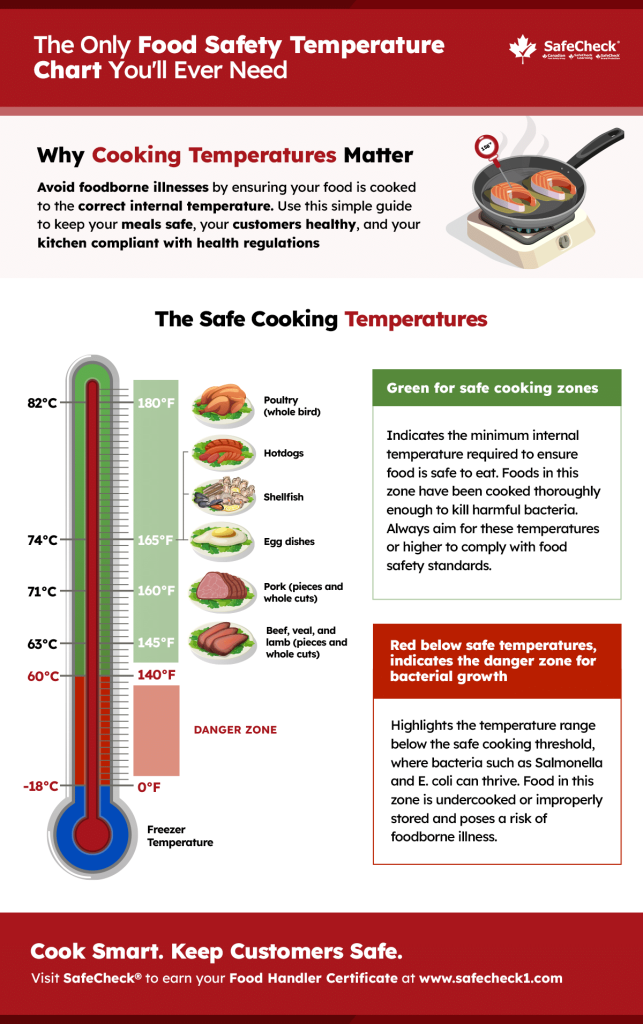
Understanding the Temperature Danger Zone. Source: Canadian Food Safety
Why Food Hygiene Education is Crucial for Commercial Kitchens
Failing to maintain sanitary standards can result in foodborne illnesses, costly fines, or permanent closure. Consequently, investing in structured learning is not just about passing health inspections; it is an essential safeguard for your daily business operations.
Industry Risk Metric: According to global health data, foodborne illnesses impact millions of individuals annually. In fact, commercial food preparation errors account for more than 60% of documented outbreaks.
Furthermore, by providing consistent learning paths, businesses can foster a proactive culture of safety. As a result, this reduces kitchen waste and boosts customer trust. Employees who understand the science behind contamination are far more likely to follow daily sanitary rules. Employees who understand the science behind cross-contamination are far more likely to adhere to daily sanitary protocols.
3 Key Pillars of an Effective Food Safety Program
An industry-standard training syllabus must cover more than simple handwashing. To build operational resilience, your curriculum should focus deeply on these three core areas:
- Preventing Foodborne Illnesses: Teach teams how to identify pathogens like Salmonella and E. coli, recognizing how quickly bacteria multiply when food enters the temperature danger zone.
- Controlling Food Hazards: Train staff to recognize physical, chemical, and biological hazards before they reach a customer’s plate.
- Implementing Sanitary Protocols: Establish clear, non-negotiable cleaning schedules, sanitizing procedures for food-contact surfaces, and personal grooming standards.
Who Benefits Most from Food Hygiene Certification?
1. Food Service Workers and Front-of-House Staff
Waitstaff, hosts, and busser teams must understand safe food handling to prevent contamination during service. For example, simple habits like handling glassware correctly or managing allergen requests protect patrons at the table.
2. Culinary Professionals and Back-of-House Teams
Line cooks, prep chefs, and kitchen managers must master cooking temperatures and cross-contamination rules. So, to build a highly capable back-of-house team, explore our strategic guide on essential corporate training programs for diverse industry roles.
3. Agricultural Teams and Supply Chain Partners
Safety begins at the source. Moreover, harvest teams, food packaging operators, and logistics drivers must maintain the cold chain to prevent spoilage before ingredients ever reach your commercial kitchen.
Integrating the HACCP Framework into Daily Kitchen Workflows
HACCP is an internationally recognized operational management system. Basically, it focuses on identifying and preventing systemic hazards in food production rather than relying on final product testing.
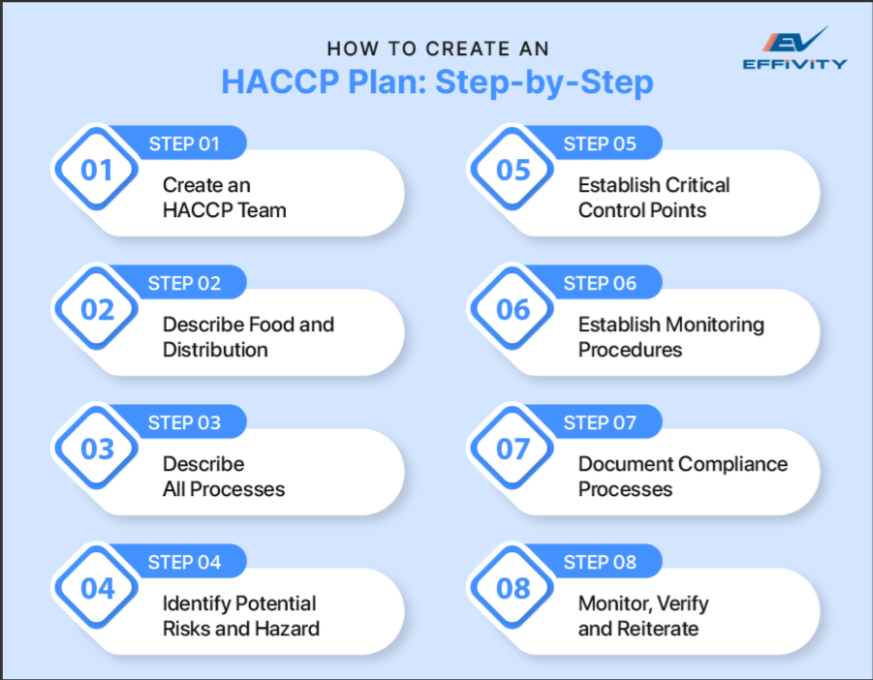
The Step-by-Step HACCP Planning Process. Source: Effivity
Implementing this structured framework helps your kitchen teams monitor critical points, such as cooking and cooling temperatures, with absolute precision. Thus, training your workforce on these standardized steps ensures consistent compliance with municipal health codes.
Finally, to design custom learning paths that seamlessly integrate these food safety systems, review our step-by-step roadmap for scalable employee development strategies.
Conclusion: Protect Your Customers and Your Brand
Consistent education is the only reliable way to eliminate hazardous food handling behaviors. Ultimately, by empowering your staff with professional safety training, you secure your operational standards and build a reputation for culinary excellence.