Occupational Health and Safety MS (Management Systems) have become the backbone of modern industrial operations, ensuring that employee well-being is prioritized alongside productivity. In 2026, a robust safety system is no longer just a legal requirement; it is a competitive advantage that protects your most valuable asset—your people.
Understanding the Framework of Occupational Health and Safety MS
An effective Occupational Health and Safety MS is a structured framework that allows organizations to identify hazards, manage risks, and improve their overall safety performance. Unlike a simple list of rules, a management system integrates safety into the very fabric of company culture.
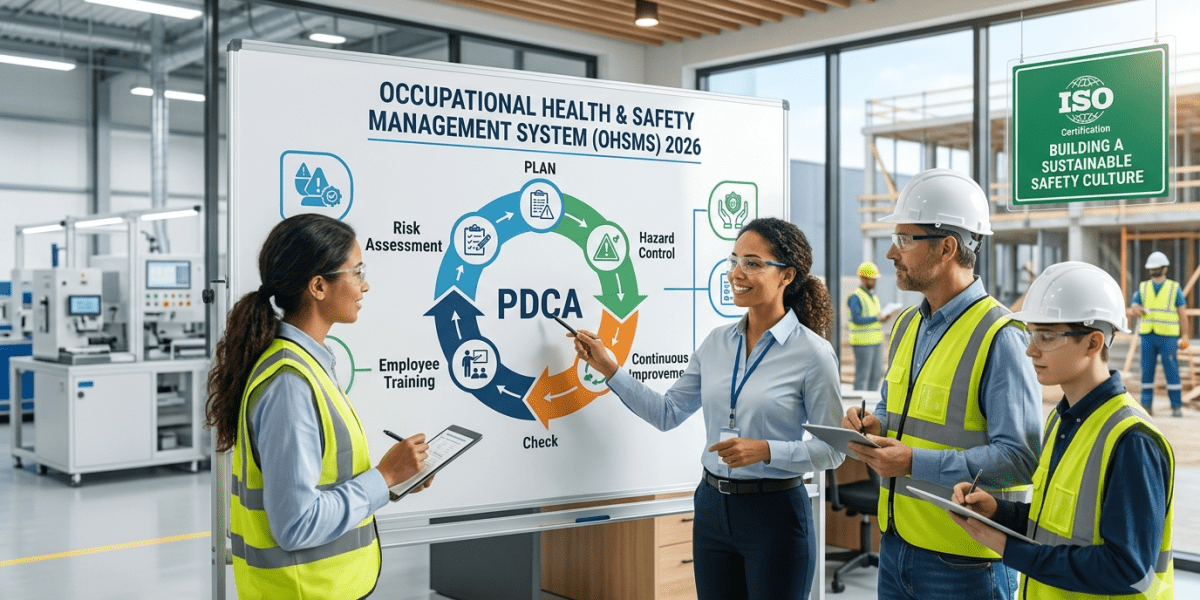
The PDCA Cycle
Most modern systems, including ISO 45001, follow the Plan-Do-Check-Act (PDCA) cycle:
- Plan: Establish objectives and processes necessary to deliver results.
- Do: Implement the processes.
- Check: Monitor and measure processes against safety policies.
- Act: Take actions to continually improve safety performance.
Key Components of a Successful Safety System
To build a scalable solution, your Occupational Health and Safety MS must include several critical pillars:
1. Leadership Commitment
Safety starts at the top. Without active participation from management, safety protocols are often ignored. Leaders must provide the necessary resources, from PPE to training budgets, to ensure the system functions correctly.
2. Hazard Identification and Risk Assessment
This is the “engine” of your safety system. You must systematically identify everything that could cause harm. This includes physical hazards (machinery), chemical hazards (fumes), and even psychosocial hazards (workplace stress).
3. Competence and Training
Employees cannot follow a system they don’t understand. Regular training sessions—ranging from general fire safety to specialized oil and gas safety—are essential to keep the workforce informed.
Why Your Business Needs a Management System in 2026
The global landscape for workplace safety is shifting. Regulatory bodies are becoming stricter, and the “Social” aspect of ESG (Environmental, Social, and Governance) reporting is putting a spotlight on how companies treat their workers. Implementing an Occupational Health and Safety MS helps you:
- Reduce Insurance Premiums: Fewer accidents lead to lower costs.
- Boost Employee Morale: Workers perform better when they feel safe.
- Legal Protection: Having a documented system is your best defense during audits.
Common Challenges in Implementation
Many organizations struggle with “Paper Systems”—systems that look great on paper but aren’t followed in reality. To avoid this, ensure that your Occupational Health and Safety MS is user-friendly and that feedback from the “shop floor” is incorporated into the planning phase.
Conclusion
Occupational Health and Safety MS implementation is a journey rather than a destination. By focusing on continuous improvement and employee engagement, businesses can transform their safety records from a liability into a strength. As we move through 2026, the integration of technology and human-centric safety design will define the leaders in every industry. Ensure your organization is ready by building your management system on a foundation of transparency and proactive risk management.
Frequently Asked Questions (FAQs)
- What is the primary goal of an Occupational Health and Safety MS?
Its main goal is to provide a safe and healthy workplace by preventing work-related injury and ill health. - Is an Occupational Health and Safety MS mandatory for all businesses?
While specific frameworks like ISO 45001 are voluntary, most countries have legal mandates requiring a documented safety system. - How often should a safety management system be audited?
An internal audit should be conducted at least once a year to ensure the system remains effective. - Can a small business implement an Occupational Health and Safety MS?
Yes, the framework is scalable and can be tailored to fit organizations of any size. - What is the difference between OHSAS 18001 and ISO 45001?
ISO 45001 has replaced OHSAS 18001, focusing more on the interaction between an organization and its business environment.